


A boiler gauge that needs topping up every week means water is escaping somewhere you cannot see. Vision Plumbing carries out Leak Detection across Kent, Medway, Surrey, East Sussex, West Sussex and Greater London, tracing hidden heating pipework leaks with thermal imaging and acoustic tracing.
In Short
- The signs that point to a hidden central heating leak
- What you can safely check yourself before anybody visits
- When a leak belongs to a registered gas engineer instead
- How leaks are traced without lifting floors
Vision Plumbing is a sole trader plumbing, drainage and hot water business, so the plumber who traces your leak is the plumber who quotes and repairs it. We carry out a leak detection anywhere in the area, and leak detection for homes in Maidstone works the same way.
Get a quick quote from Vision Plumbing anywhere in Kent, Medway, Surrey, East Sussex, West Sussex and Greater London, before a slow leak reaches a ceiling.
What should I do if I suspect a leak in my central heating system?
If you suspect a leak in your central heating system, turn the heating off, keep water away from electrics, check the pressure gauge, radiator valves and visible pipework, and write down how fast the pressure falls. If the pressure keeps dropping with no visible water, the leak is hidden and needs tracing before anybody lifts a floor.
Get a quick quote from Vision Plumbing and have a hidden heating leak traced with thermal imaging before any floorboard comes up.

The signs that point to a heating leak
A sealed central heating system holds the same water month after month, so any steady loss is going somewhere. These signs tell you where you stand.
- A pressure drop on the gauge. The needle falls over days or weeks and keeps needing a top up.
- Damp patches on a ceiling, skirting or floor near a radiator, often with a tide mark or bubbling paint.
- Weeping radiator valves, green or white crusting on a valve body, or rust streaks under a radiator.
- Drips from the pressure relief valve discharge pipe, the copper pipe that usually runs through an outside wall near the boiler.
- Warm patches on a floor where no pipe should be giving off heat, which points to pipework leaking under boards or screed.
A falling gauge with no water in sight is the commonest hidden leak and the hardest to find by eye. If your symptoms point that way, we can carry out a leak detection anywhere in the area we cover, including a leak detection in Royal Tunbridge Wells.
Get a quick quote from Vision Plumbing and have a hidden heating leak traced with thermal imaging before any floorboard comes up.
What you can check yourself and what you cannot
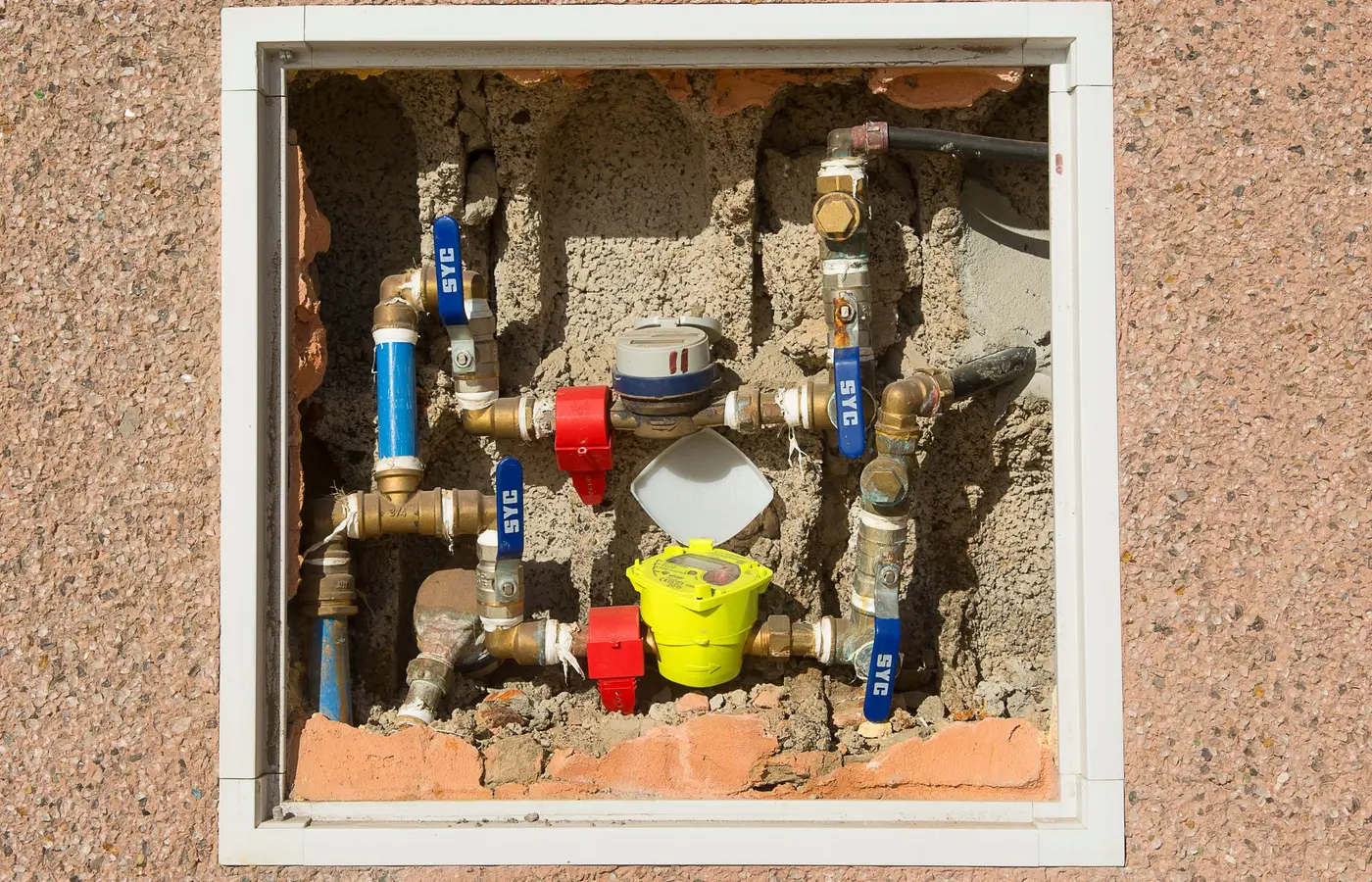
There is a fair amount you can safely do before anybody visits.
- Turn the heating off so hot water is not pushed round a leaking circuit.
- Put a bowl or towels under a drip and move rugs, furniture and electrical items clear.
- Note the pressure reading cold, then again next morning, so the rate of loss is on record.
- Run dry tissue round each radiator valve and visible joint, which shows a weep the eye misses.
- If the manual for your system explains how, top the pressure back up once through the filling loop, then close it fully.
Do not open the boiler casing, pressure test the system yourself or cut into floors on a guess. Water inside the boiler, at the expansion vessel or from the boiler's own pressure relief valve belongs to a registered gas engineer, because the fault sits inside a gas appliance. A leaking radiator, a weeping valve or a hidden pipe leak elsewhere in the house is plumbing.
How a hidden heating leak is traced
Water leak detection without lifting floors follows a set order.
- History first. How fast the pressure falls, when it started and any recent work narrow the search before kit comes out.
- A visual check. Every radiator, valve and exposed joint is looked over, because some leaks are in plain view once somebody looks properly.
- Thermal imaging. With the heating running, hot water escaping from pipework shows as a bloom of heat that the camera picks up through a floor or wall.
- Acoustic tracing. Water leaving a pressurised pipe makes a sound, and listening equipment pinpoints where it is loudest.
- Marking the spot. Only the small area above the leak is opened for the repair.
Because one plumber traces the leak and quotes the repair, nothing gets lost between a survey and a separate visit.
The safety points that come first
A water leak is rarely dangerous in itself. What sits around it can be.
- A smell of gas is a different emergency. Use no switches or flames, open windows, turn off the gas at the meter if you can safely, leave the property and call the gas emergency line.
- A carbon monoxide alarm, or headaches and drowsiness near the boiler, means getting everybody into fresh air and seeking medical help.
- Water near sockets or light fittings means switching off at the consumer unit, but only from a dry floor.
- Hot water from a split pipe can scald, so let the system cool before touching it.
The law requires anyone doing gas work to be competent, and anyone doing it as a business to be Gas Safe registered, and Gas Safe Register advises using a registered engineer. We do no gas work: a gas leak we locate is handed to a registered gas engineer.
Mistakes that make a heating leak worse
- Topping up and forgetting. Each top up draws in fresh, oxygen-rich water, which feeds corrosion inside radiators and pipework.
- Treating leak sealer as the cure. It may slow a pinhole, but it never tells you where the water went, and it is worth checking your boiler guarantee before adding anything.
- Assuming no damp means no leak. Water can run along a joist or into a void for months before a mark appears.
- Lifting floors on a hunch. Opening the wrong room costs a floor and leaves the leak.
What decides the answer in your home
- Where the pipes run. Pipework under suspended timber floors is easier to reach than pipe buried in solid screed, where non-destructive tracing saves the most disruption.
- How fast the pressure falls. A drop overnight is urgent; a slow loss over weeks still needs finding.
- Where the water shows. At a radiator or visible joint it is a plumbing repair. At or inside the boiler it is a gas engineer's job.
- Who else is affected. In a flat, water reaching a neighbour's ceiling makes it urgent whatever the gauge says.
Water coming through a ceiling at night is what our 24-hour emergency call-out is for. A slow drop on the gauge is a booked leak detection visit, found before anybody lifts a floor.
Get a quick quote from Vision Plumbing and have a hidden heating leak traced with thermal imaging before any floorboard comes up.