

A sink still holding water after a bottle of unblocker is telling you something. Vision Plumbing does Drain Unblocking across Kent, Medway, Surrey, East Sussex, West Sussex and Greater London, and this page tells you plainly what the bottle can fix and what it cannot.
The Essentials
- The liquid that suits most UK sinks, and when not to use it
- Which formulation suits hair, grease, old pipes or a septic tank
- Why two doses is the limit, and when a drain needs digging
- What to stop doing and write down once the bottle fails
- How the water level tells you where the blockage sits
- The mechanical fixes worth trying before any chemical goes in
Vision Plumbing is a sole trader plumbing, drainage and hot water business, so the plumber who quotes the job is the one who does it. We cover drain unblocking across the area, blocked drains in Maidstone included, with our own jetting equipment.
Get a quick quote from Vision Plumbing for any blocked drain across Kent, Medway, Surrey, East Sussex, West Sussex and Greater London before another bottle goes down it.
What is the best liquid drain unblocker in the UK?
The best liquid drain unblocker in the UK for most homes is a thick caustic gel based on sodium hydroxide, used on a slow drain, because it sinks through and breaks down hair, soap scum and grease. On a septic tank or a drain that is fully stopped, reach for a plunger or an enzyme product instead.
If the second bottle has not shifted it, get a quick quote from Vision Plumbing and have the drain rodded or jetted instead.
The right bottle depends on the blockage, the pipe and where it drains to
No liquid fixes every drain, and the products sold as the strongest are often the wrong choice. Three things decide it: what is blocking the pipe, what the pipe is made of, and whether your waste goes to a sewer or a septic tank.
Bathroom drains block with hair and soap scum. Kitchen drains block with grease, fat and food. A caustic gel handles both, which is why it is the sensible default. Grease that has set hard further down the line is out of reach of anything poured from the sink.
- Caustic gel (sodium hydroxide): thick enough to sink through the water in the trap. It turns grease into soap and softens hair. It is fine on plastic waste pipe, but it attacks aluminium and can mark chrome, so keep it off both.
- Sulphuric acid unblockers: the most aggressive liquids on sale. They heat up in the pipe, can damage older metal pipe and plastic joints, and spit back when poured. We would not keep one in a house with children.
- Bleach-based liquids (sodium hypochlorite): good on smells and light soap build-up, weak against a real hair plug.
- Enzyme and bacterial products: slow, gentle and biodegradable. They suit a septic tank and regular maintenance. They are too slow for a sink that has already stopped.
On a septic tank, harsh chemicals kill the bacteria the tank depends on, so use enzyme products or a plunger and nothing stronger. In older houses with lead or cast iron waste pipes, keep acid out entirely.
The safety rules matter more than the brand. Wear gloves and eye protection, open a window and pour slowly. Never mix two products or follow one with another: bleach and acid together release chlorine gas. Never plunge a drain with chemical sitting in it, because the plunger throws it straight back at you.
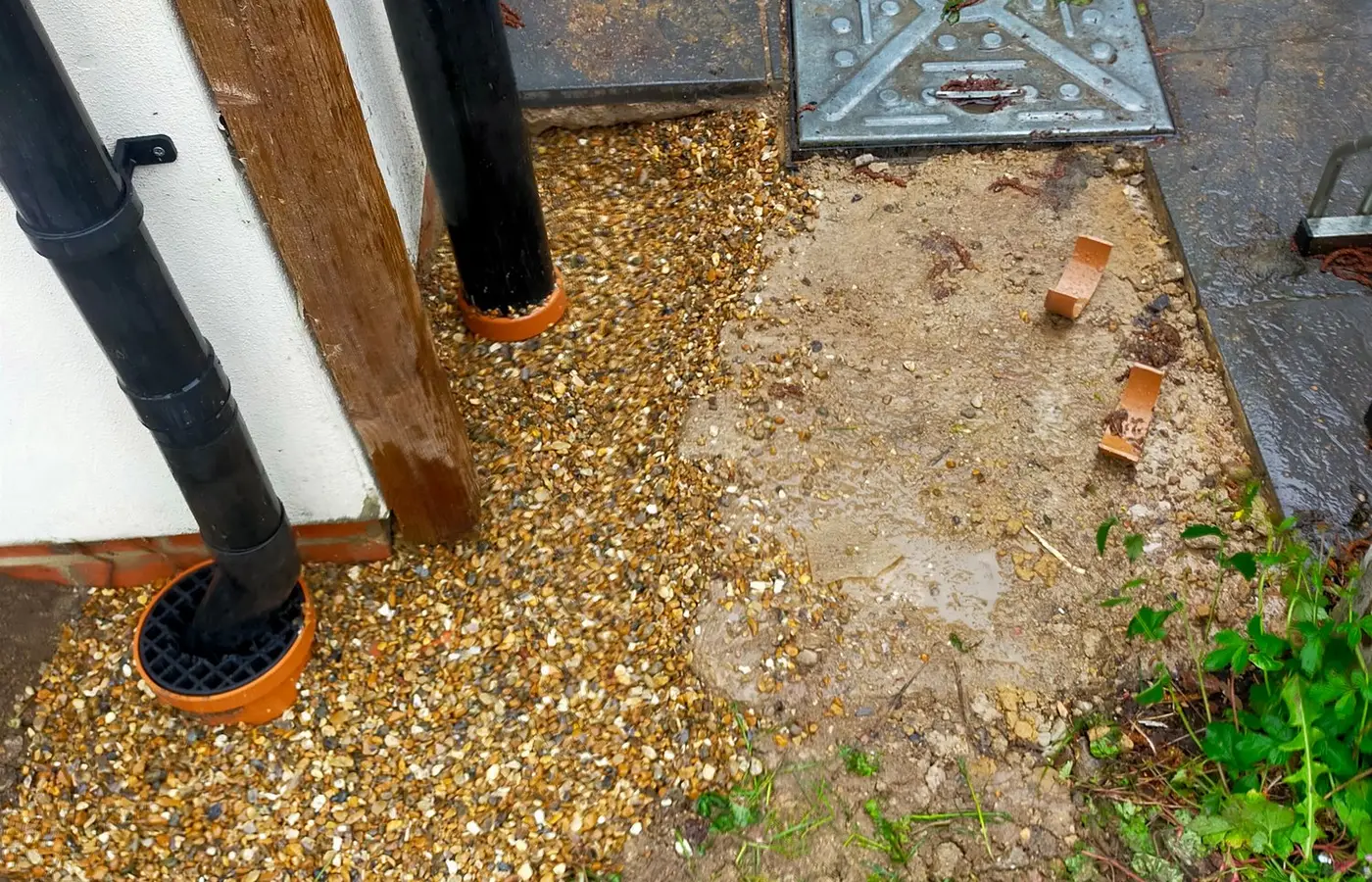
A bottle works in minutes or not at all, and most drains clear in one visit
A caustic gel needs the contact time printed on the label, then a flush of hot tap water. Enzyme products work overnight, so that sink or bath is out of use until morning. That is the whole disruption a liquid causes.
Give it two attempts and no more. If a second dose has not moved the water, the blockage is beyond what a liquid can reach or dissolve. A third bottle only leaves a pipe full of corrosive water for whoever opens it next.
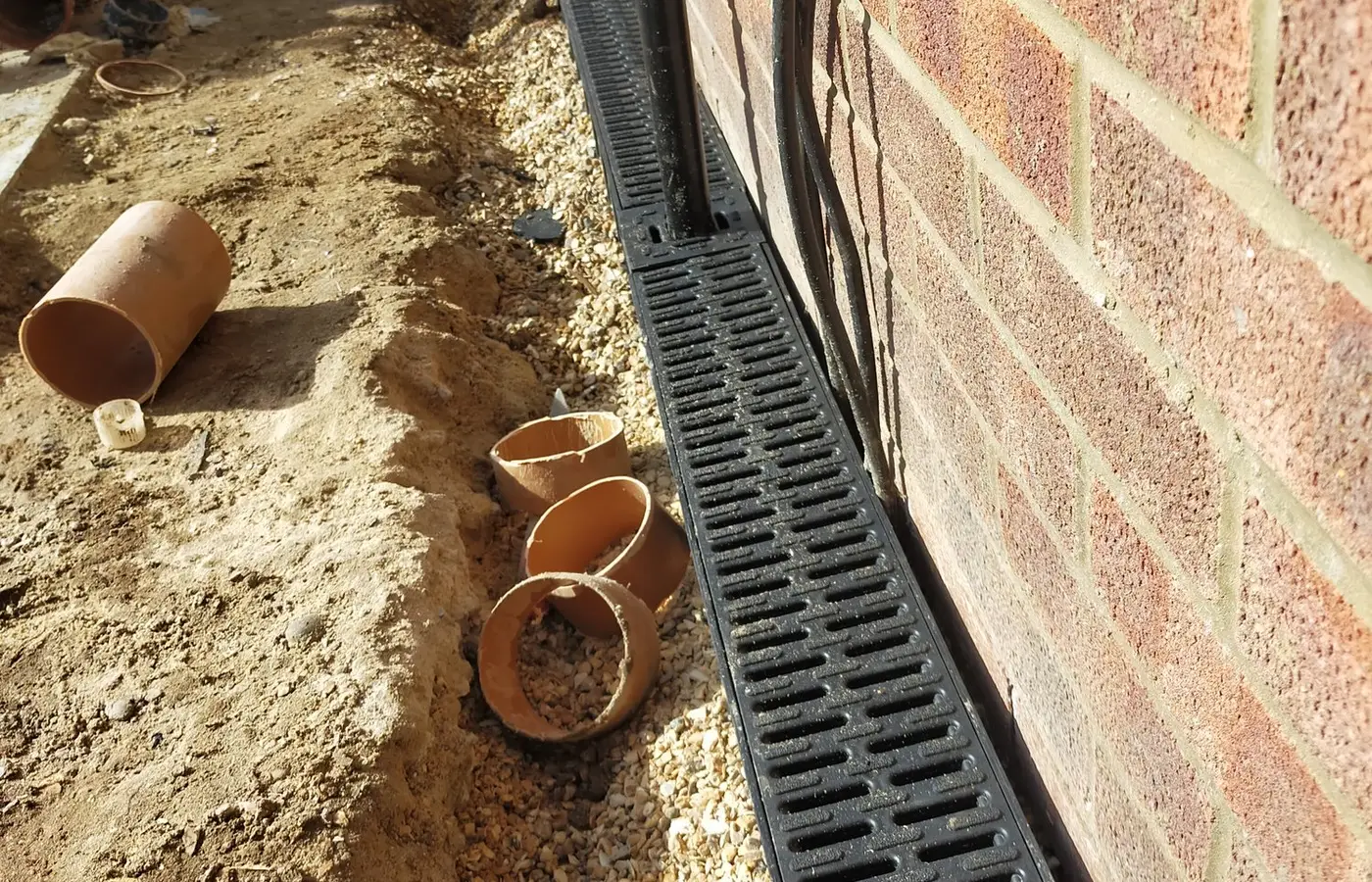
Once a plumber takes over, most blocked drains clear by rodding or high-pressure jetting through the existing pipe. Nothing gets dug up and nothing in the garden is touched. We own our jetting equipment, so the heavier jobs (fat, scale, roots and silt) do not wait for kit to be hired in. A drain that has cracked or collapsed is a different job. It needs a repair, sometimes no-dig and sometimes dug, and the camera shows which. We handle drain unblocking right across our area, and drainage in Royal Tunbridge Wells is covered the same way as everywhere else we work.
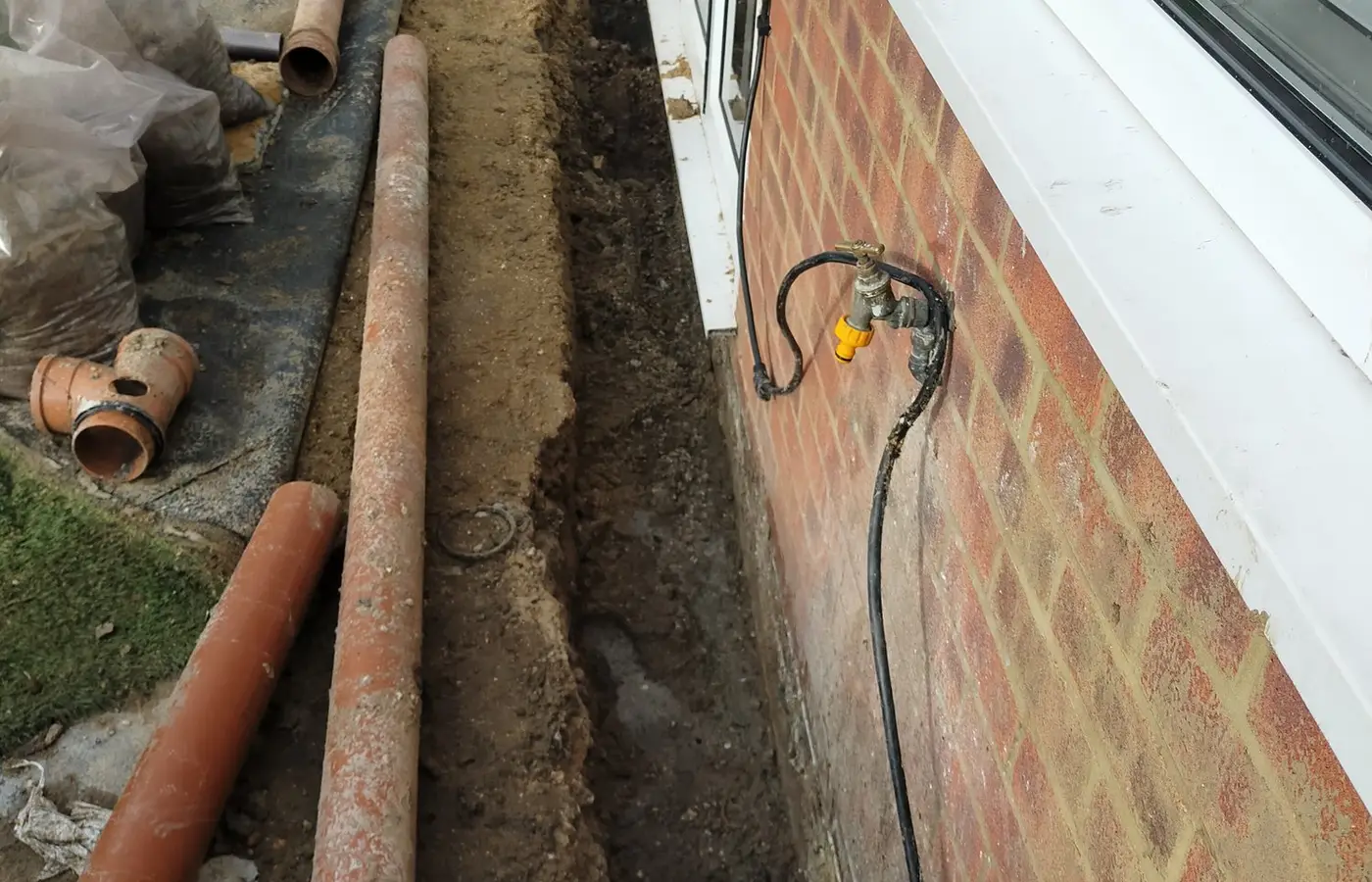
Stop pouring, check outside, then get it looked at
Once the liquid has failed, the next steps are simple.
- Stop adding chemicals, and do not pour in anything else on top.
- Write down what you have already used and when. Anyone opening that pipe needs to know, for their eyes and skin.
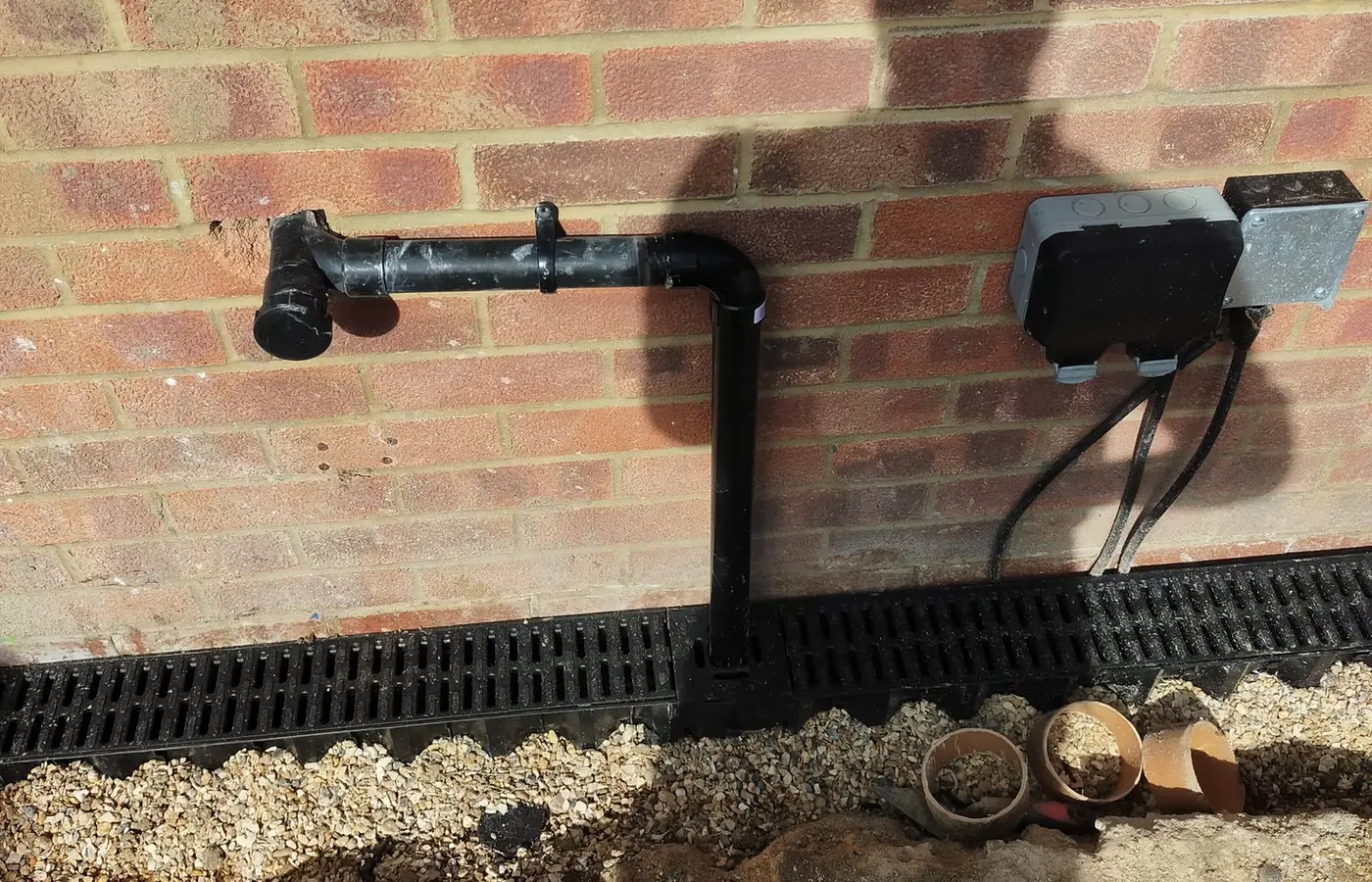
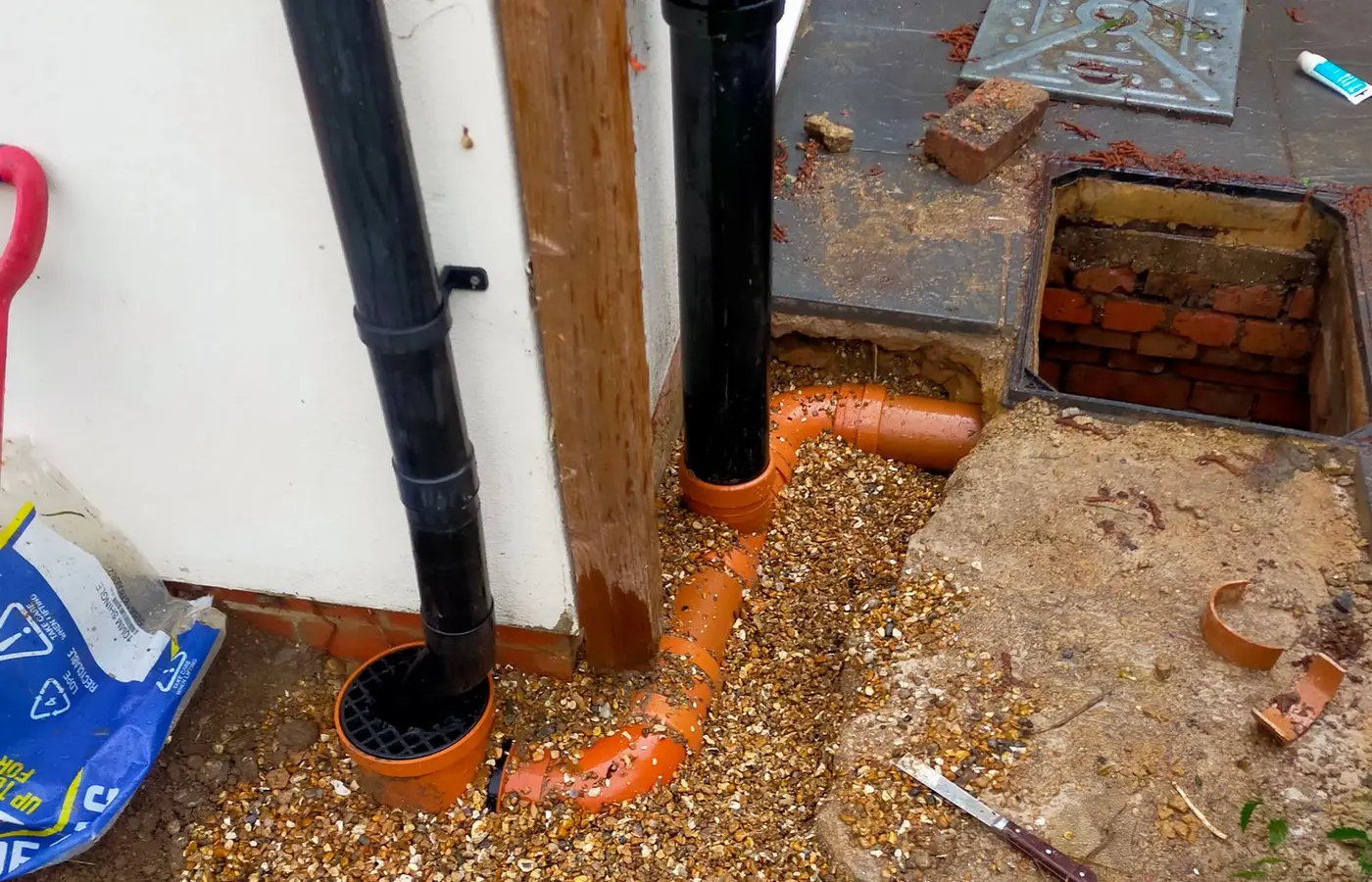
- Lift the outside gully grid or manhole cover if you can do it safely. A full chamber means the blockage is in the main drain.
- Stop using the affected fittings, and the rest of the house if the manhole is full.
- Get it cleared before the water finds its own way out.
Our drain unblocking is quoted and done by the same plumber, Norbert. The person you describe the problem to is the person who turns up with the rods and the jetter, so tell him what went down the drain and he plans for it. Every job carries a one year warranty on parts and labour. If sewage is backing up into the house, the 24-hour emergency call-out covers it.
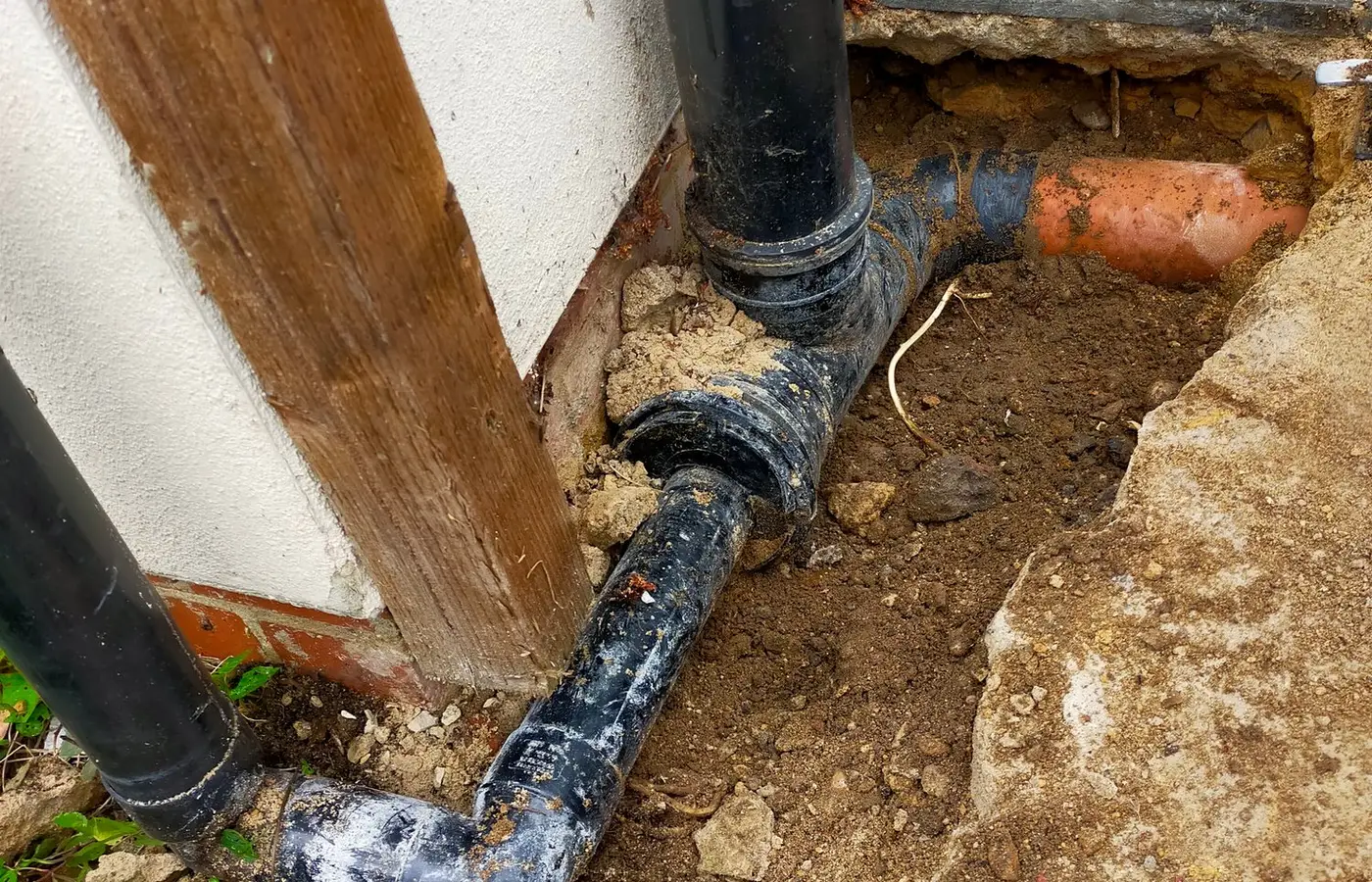
Where the water sits tells you where the blockage is
- One sink, bath or shower draining slowly: the blockage is in that trap or just beyond it. A liquid or a plunger has a fair chance.
- Standing water that will not drop at all: the pipe is fully stopped. Liquid sits on top and dilutes, so plunge it or have it cleared mechanically.
- Several fittings slow at once, or the toilet rising when the bath empties: the shared drain is blocked, and nothing poured from one sink reaches it.
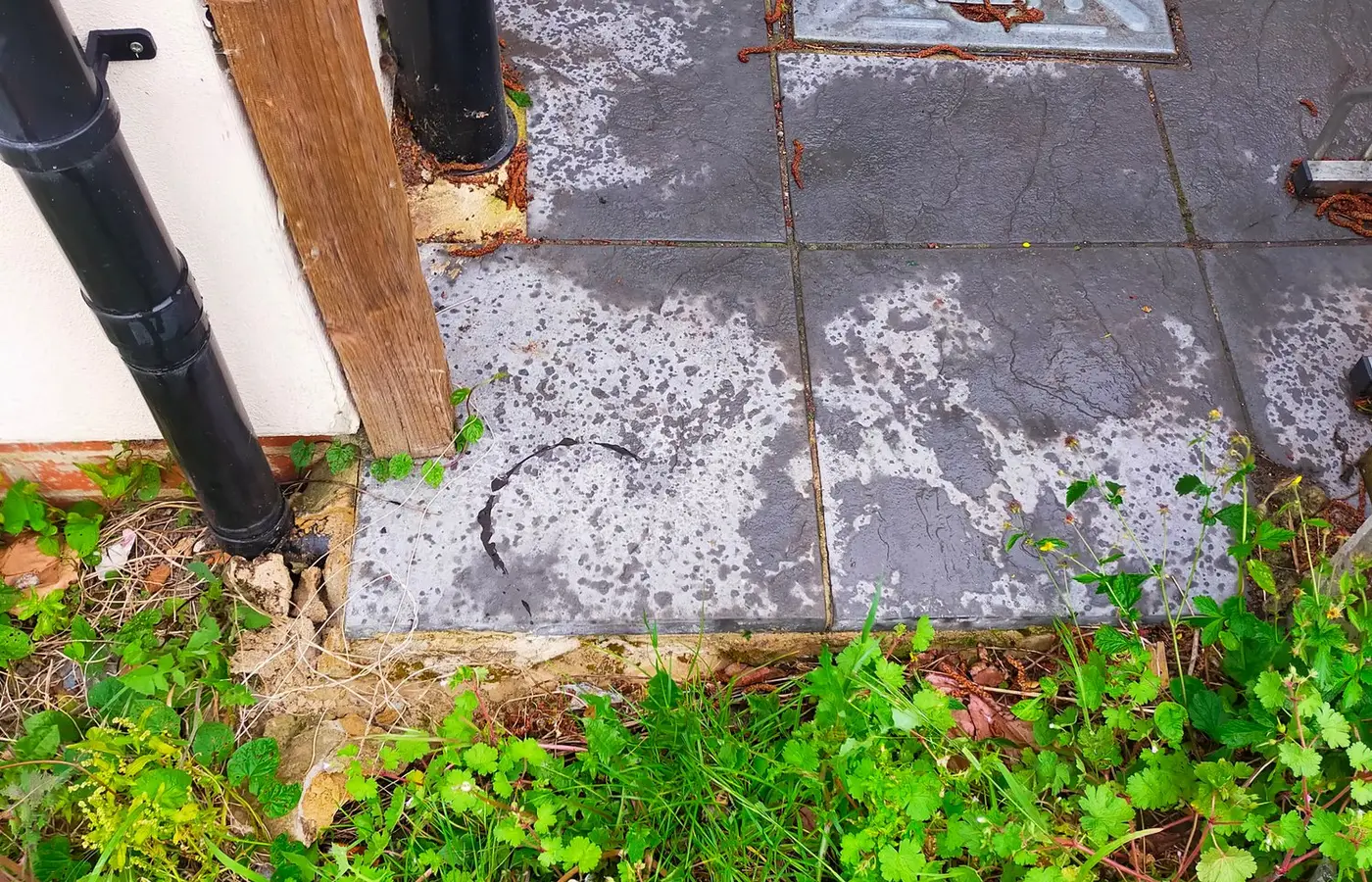
- Gurgling, a sewage smell outside, or a wet patch by the manhole: the main drain is blocked or damaged.
- The same drain blocking again within weeks: something is wrong with the pipe itself, such as roots, a sag or a crack. A CCTV drain survey will show it.
A liquid only makes sense in the first case. In every other case it wastes your time and leaves chemical in the pipe.
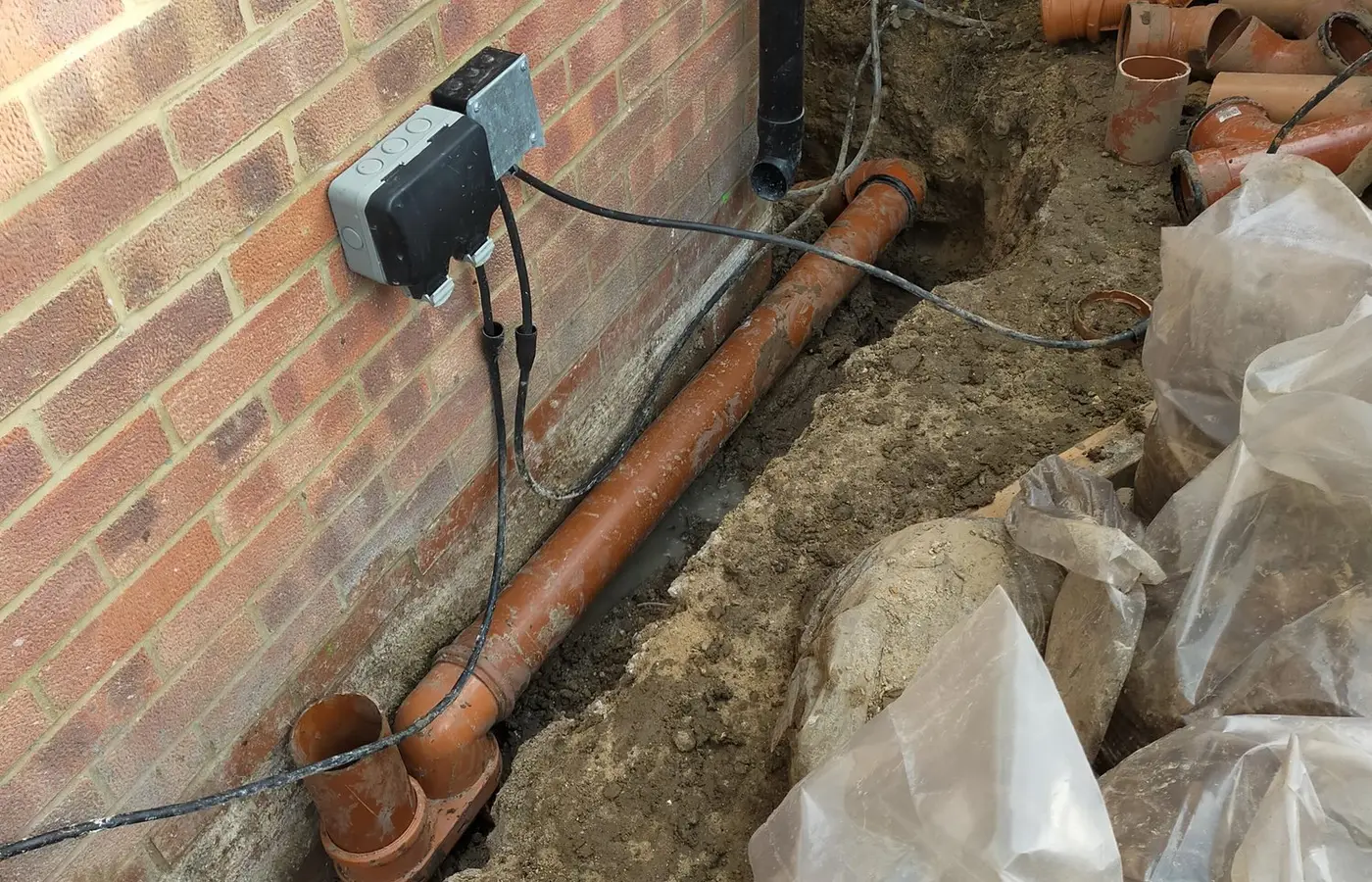
What you can safely do yourself, and where to stop
Most sink and bathroom drains can be handled at home. Try the mechanical options before the chemical ones.
- Use a cup plunger on the sink or bath, with a wet cloth over the overflow so the pressure goes down the pipe.
- Unscrew and clean the bottle trap under the basin, with a bucket underneath. Most hair blockages are found there.
- Pull hair out of a shower or bath waste with a plastic drain snake from any hardware shop.
- Flush kitchen drains with hot tap water and washing-up liquid. Boiling water from a kettle can soften plastic waste joints.
- Fit a hair catcher and keep fat out of the sink. If a drain is prone to blocking, use an enzyme product every month.
Stop and hand it over when any of these apply:
- the blockage is past the trap
- more than one fitting is affected
- a manhole is full
- chemicals have gone in and the water is still standing
- the drain keeps blocking again
Rods, jetting and a camera do in one visit what bottles cannot do in a month, and they do it without guessing what is wrong with the pipe.
If the second bottle has not shifted it, get a quick quote from Vision Plumbing and have the drain rodded or jetted instead.