


Water is sitting in the chamber, the downstairs toilet gurgles when the bath empties, and the question on your mind is how big the bill gets. Most of that is decided by what is in the pipe, and high pressure drain jetting is the answer for the stubborn cases across Kent, Medway, Surrey, East Sussex, West Sussex and Greater London south of the Thames.
At a Glance
- The six things that make your drain job cheap or dear
- Why chemical cleaners and pressure washers often make it worse
- When a shared drain may be the water company's to fix
- The safety points before you lift a chamber cover
- Which blockages you can clear with a plunger or rods
- Symptoms that separate a simple blockage from a broken pipe
Vision Plumbing is a sole trader plumbing, drainage and hot water business, so the plumber who quotes the job is the plumber who turns up and does it. If a stubborn drain needs high pressure jetting, drain cleaning in Maidstone is covered too.
Get a quick quote from Vision Plumbing anywhere across Kent, Medway, Surrey, East Sussex, West Sussex and Greater London, before a slow drain turns into a flooded chamber.
How much to unblock a drain in the UK?
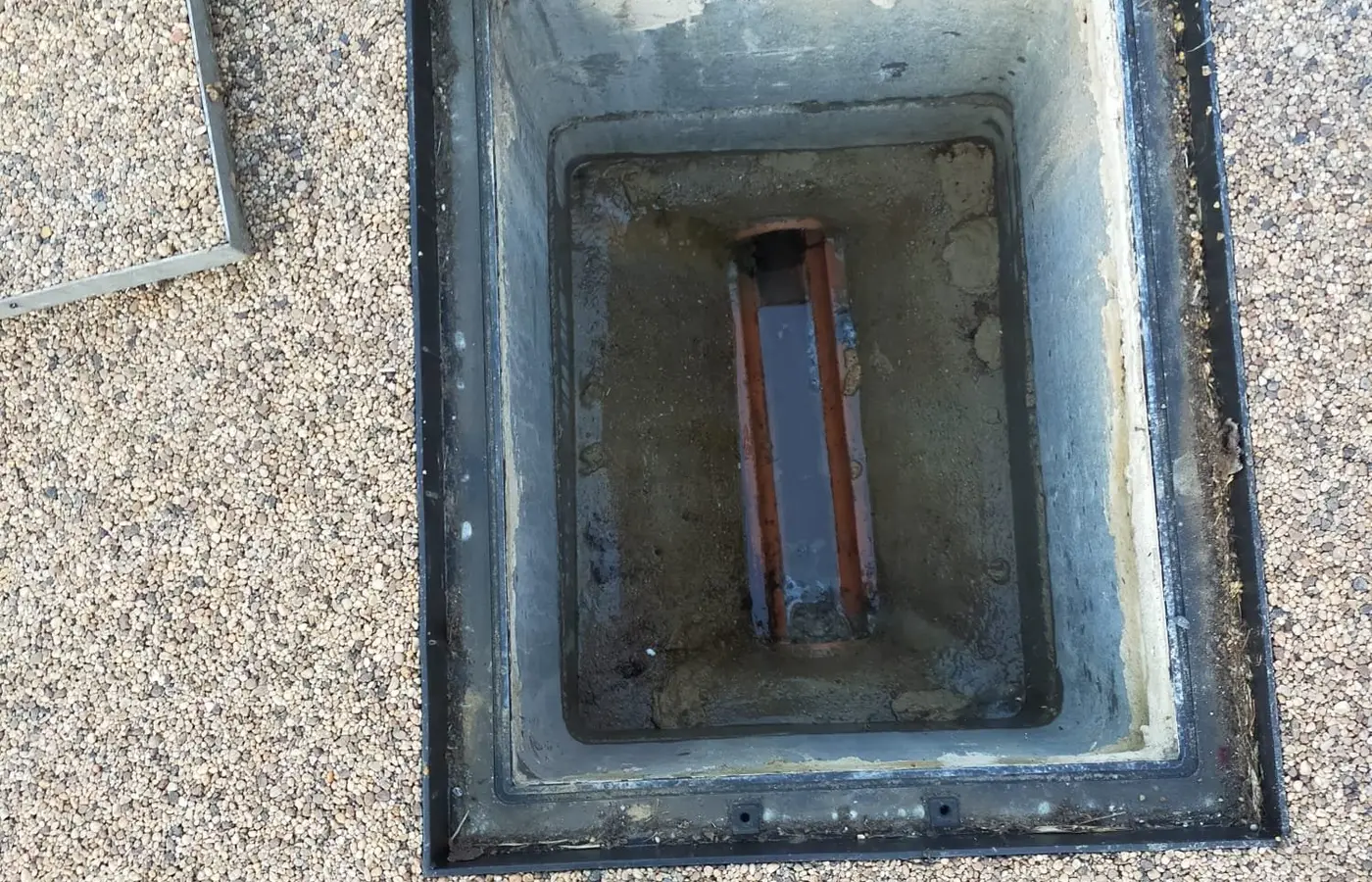
How much to unblock a drain in the UK depends on what is blocking it, where it sits, how easy the drain is to reach, and whether it is blocked or broken. A soft blockage cleared through an open chamber is the simple end, and a collapsed pipe needing a dig or no-dig repair is the other.
Water backing up in the chamber? Get a quick quote from Vision Plumbing and find out whether it is a rodding job or a jetting job before it gets worse.
A single going rate is the first mistake
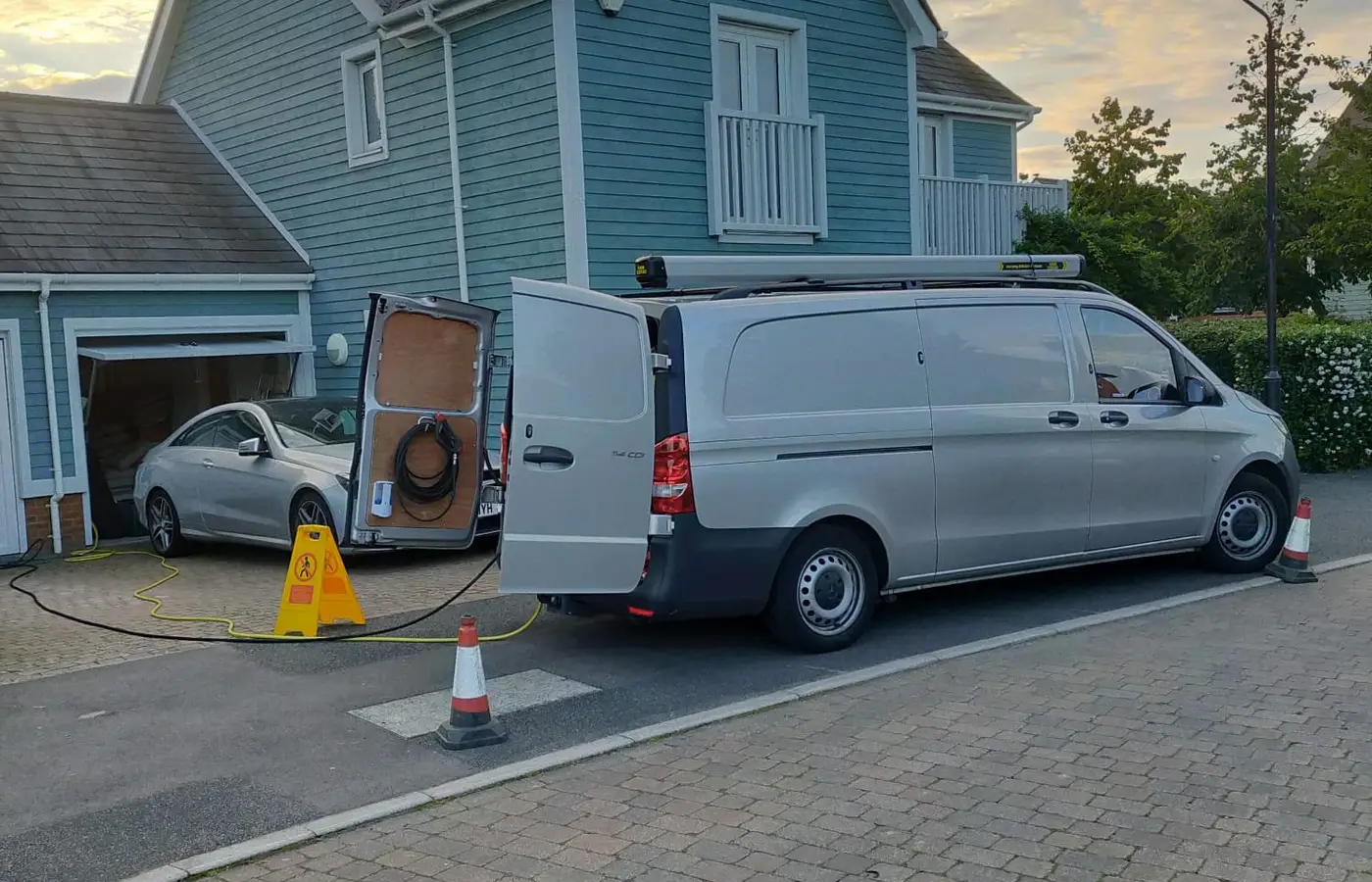
The most common misconception is that there is one standard price for unblocking a drain, so any quote above it must be a rip-off. Two blocked drains on the same road can be completely different jobs. A national average tells you nothing about yours. These are the things that actually move the price:
- What the blockage is. Wipes, paper and a soft build-up usually shift with rods. Hardened fat, scale, silt and tree roots need high-pressure jetting.
- Where it sits. A blockage in the first chamber is close to hand. One deep in a long run takes longer to reach and longer to confirm clear.
- Access. An open inspection chamber is quick. A chamber buried under a patio, paved over or lost altogether is not.
- Blocked or broken. A blocked pipe is cleared. A cracked, displaced or collapsed pipe has to be repaired, and that is a different job.
- Repeat history. A drain that keeps blocking usually needs a camera down it to find out why.
- What has already been tried. Chemicals sitting in the chamber, or a snapped rod left in the line, add work before the real blockage is even reached.
Other mistakes cost money directly. Chemical drain cleaner poured into an outside drain rarely reaches the blockage, and it leaves a caustic pool for whoever opens the chamber next. A garden pressure washer pushed into a drain can drive a blockage further down the pipe and does nothing to fat that has set hard.
Treating every blocked drain as a dig is the opposite error. Most blockages are cleared without touching the garden. A collapsed pipe is what means excavation or a no-dig repair, and only a camera tells you which one you have.
Whose drain it is decides who pays, and safety comes first
Before anybody talks about cost, find out whose pipe it is. Broadly, the drain that serves only your property and sits inside your boundary is yours. Since 2011, in England and Wales, most pipes shared with neighbours, and the lateral drain running from your boundary to the public sewer, have been the responsibility of the local water company. If the blockage is in a shared section, the job may not be yours to pay for at all, so check with your water company before booking anybody.
Then the safety points, which matter more than the bill:
- Sewage carries bacteria. Wear gloves, keep children and pets away from an open chamber, and wash down anything it touches.
- Never mix drain chemicals, and never pour a second product on top of one that has already failed.
- Do not climb into a deep chamber. Lift the cover with a proper key or lifter, and do not lean on edges you have not checked.
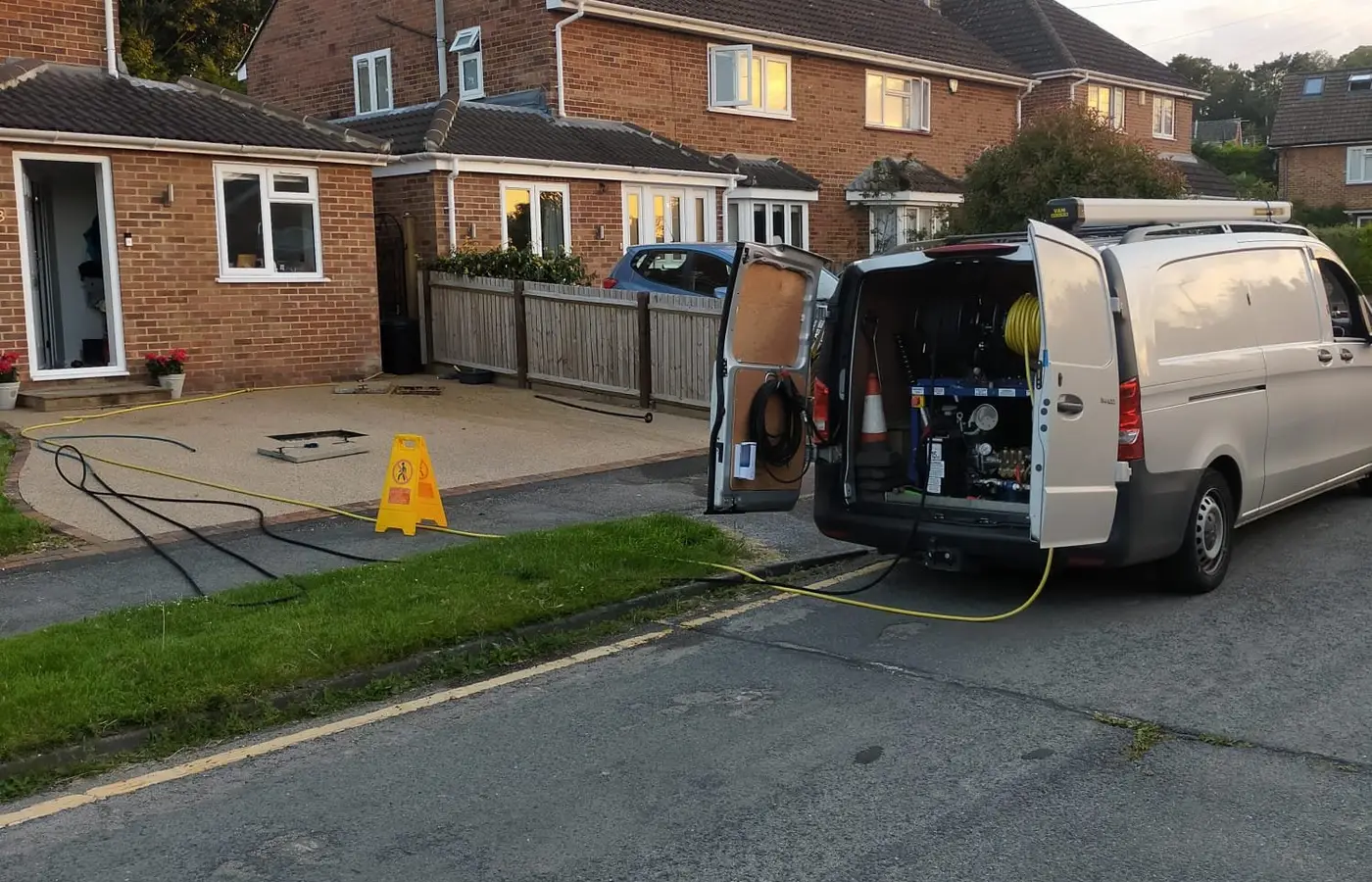
- Jetting is controlled work. The pressure and the nozzle are matched to the pipe, because old clay and pitch fibre pipes under older houses can be damaged by too much force in the wrong place.
Water backing up in the chamber? Get a quick quote from Vision Plumbing and find out whether it is a rodding job or a jetting job before it gets worse.
What you can clear yourself and what needs a drainage plumber
Plenty of blockages are yours to clear, and doing it yourself is the cheapest outcome of all. These are fair game:
- A slow sink or basin: try a plunger first, then take off the trap underneath with a bowl in place and clean it out.
- A blocked toilet: a toilet plunger with a proper seal, worked steadily rather than hard.
- An outside gully choked with leaves or silt: clear the grate and scoop out what you can reach, wearing gloves.
- A blockage you can see in an open inspection chamber: a set of drain rods, always turned clockwise so the joints stay screwed together.
Stop there. If the rods will not reach it or will not shift it, if more than one fitting is backing up, if the blockage comes back within weeks, or if you suspect the pipe itself is damaged, more effort from the garden will not help and can make it worse.
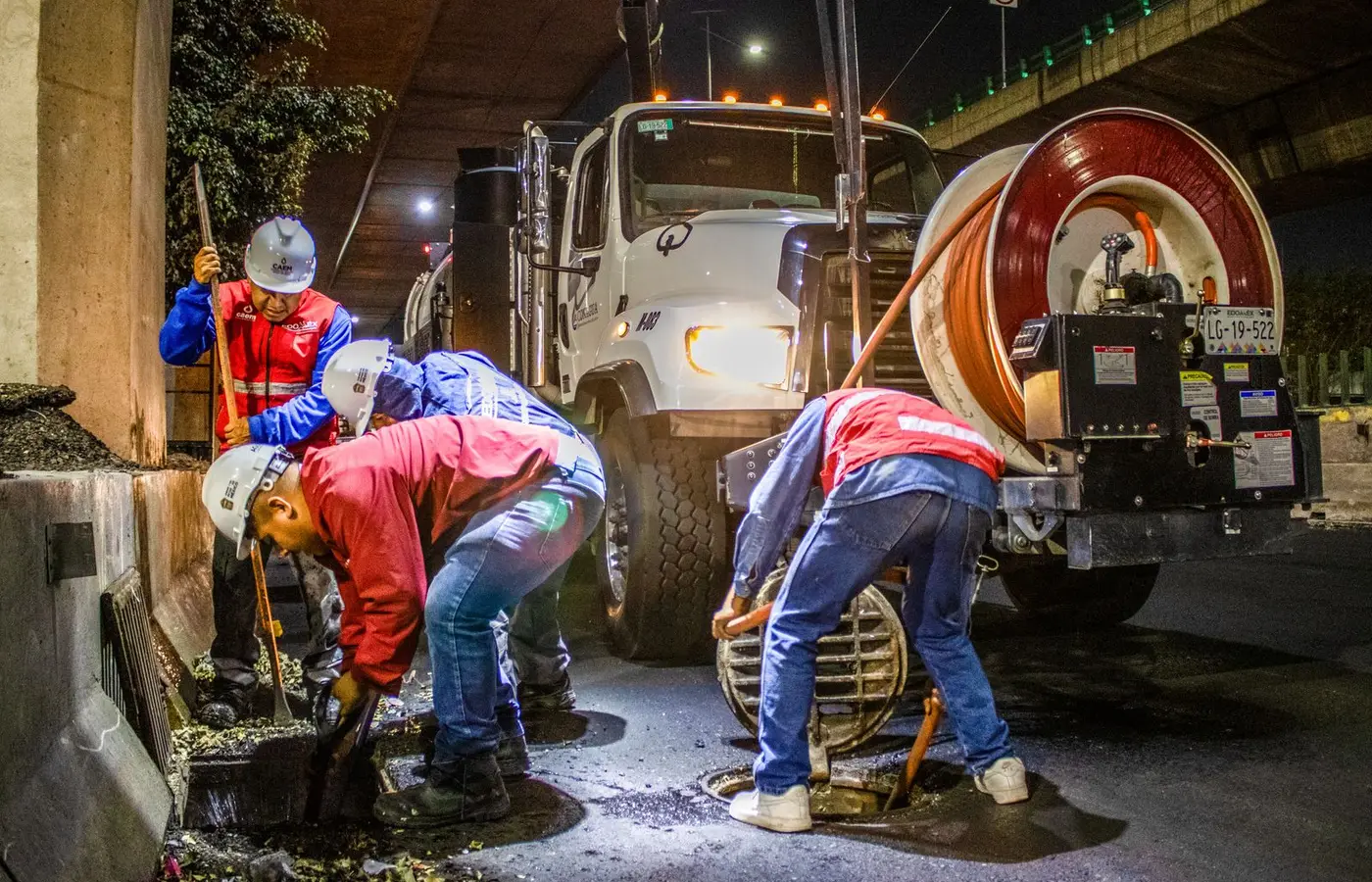
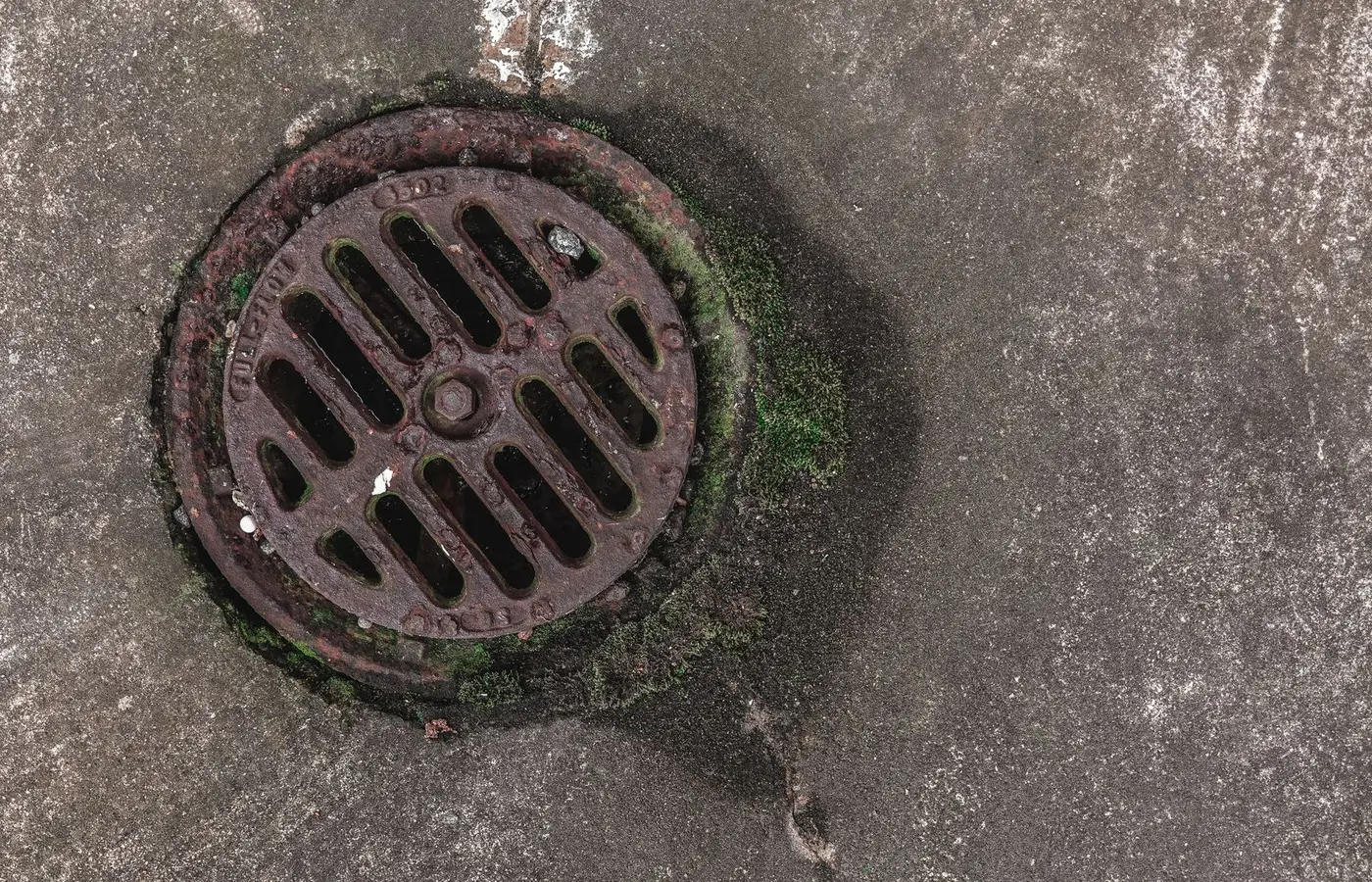
That is where high-pressure jetting earns its keep. Rodding punches a hole through a blockage; a jet scours the full bore of the pipe, cutting through the fat, scale, roots and silt that rodding leaves on the walls, so the drain stays clear for longer. Vision Plumbing owns its own jetting equipment and CCTV camera, so the drain cleaning and the look down the pipe afterwards come from the same plumber, with nothing hired in.
The signs that tell you which kind of job you have
You can usually work out roughly where you stand before anybody arrives. Read the symptoms:
- One fitting slow, everything else fine. The blockage is local, in that fitting's trap or waste. Usually a small job, and often one you can do.
- Several fittings slow or gurgling, especially downstairs. The blockage is in the main drain, and it is a job for rods or jetting from the chamber.
- The toilet water rises when the bath or washing machine empties. Another main drain sign: the water has nowhere to go.
- Water standing in an inspection chamber. The blockage is downstream of that chamber. If the next chamber along is empty, it lies between the two.
- A blockage that returns every few weeks. Something keeps catching: a lining of fat, roots through a joint, a displaced section. A camera survey finds it.
- Smells, damp patches, sunken paving or rats near the line. The pipe may be broken. Survey it before anybody clears it, because the fix could be a dig or a no-dig repair.
The first four usually point to a blockage cleared in one visit. The last two are where the real cost sits, and finding out early is far cheaper than letting a cracked pipe wash out the ground around it.
Water backing up in the chamber? Get a quick quote from Vision Plumbing and find out whether it is a rodding job or a jetting job before it gets worse.