
A drain that will not clear puts the house on hold. Vision Plumbing does Drain Unblocking across Kent, Medway, Surrey, East Sussex, West Sussex and Greater London south of the Thames, and this article sets out what decides how long yours takes.
The Quick Answer
- How long a sink, toilet or outside drain usually takes to clear
- The four stages of a visit, from diagnosis to final flush test
- Which symptoms point to one fitting and which to the main drain
- The common mistakes that turn a quick clear into a long one
Vision Plumbing is a sole trader plumbing, drainage and hot water business: the plumber who quotes your drain is the plumber who clears it. For drain unblocking at home or drain unblocking in Maidstone, we cover the whole area.
Get a quick quote from Vision Plumbing and have the blocked drain seen by the plumber who will clear it, anywhere across Kent, Medway, Surrey, East Sussex, West Sussex and Greater London.
How long does it take a plumber to unblock a drain?
How long it takes a plumber to unblock a drain depends on what the blockage is and where it sits: a single blocked sink, bath, shower or toilet, or an outside drain with a reachable chamber, is usually cleared and tested within an hour or two. Packed fat, roots or a damaged pipe can take most of a day.
Get a quick quote from Vision Plumbing and find out what is holding up your drain before it backs up any further.
Most blockages clear in a single visit
A typical domestic blockage is one job and one visit. A basin trap full of grease and food, a shower waste matted with hair, a toilet that will not drain away: these are usually found and cleared quickly, because the blockage sits close to the fitting and can be reached from the room it is in.
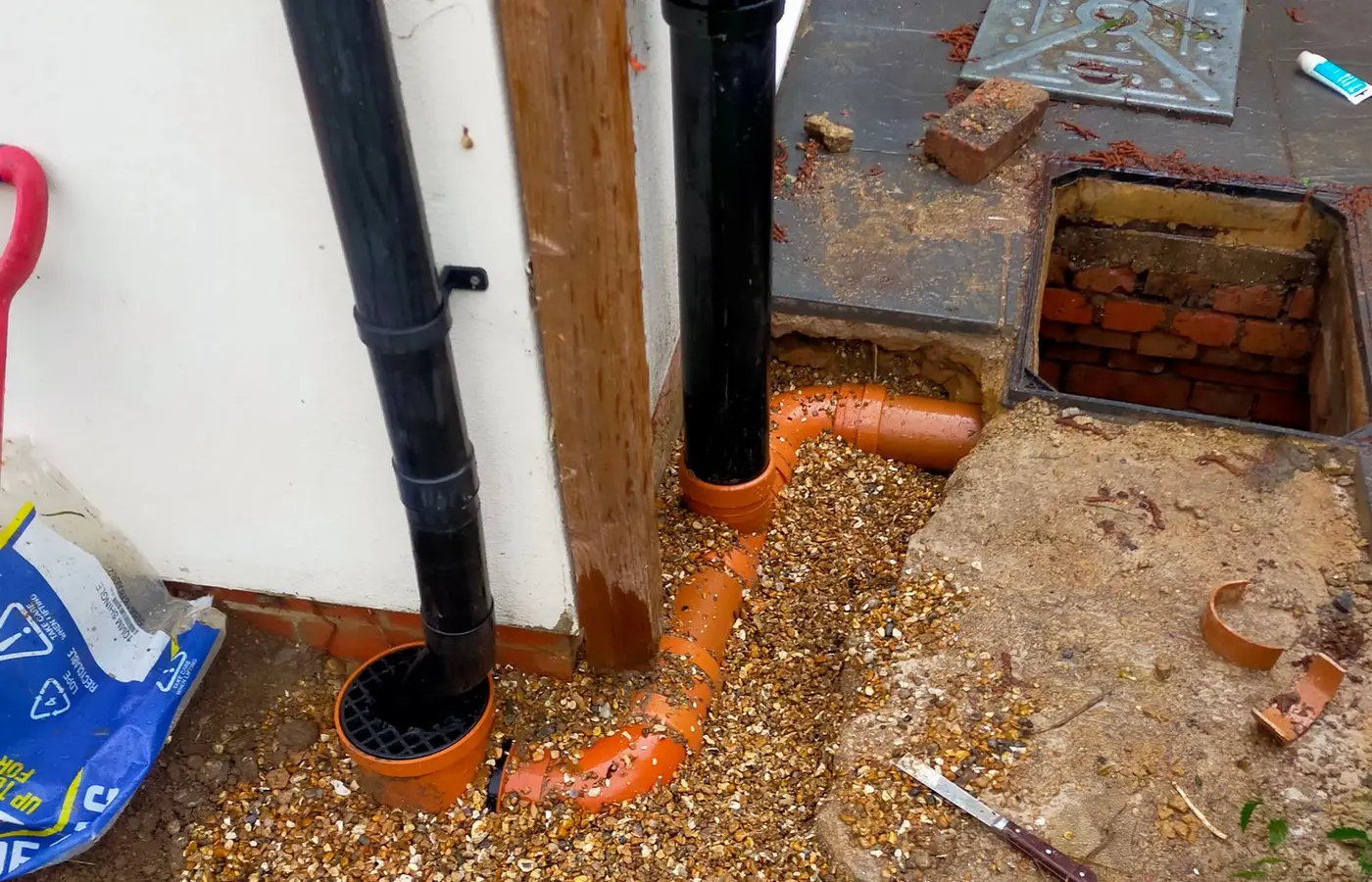
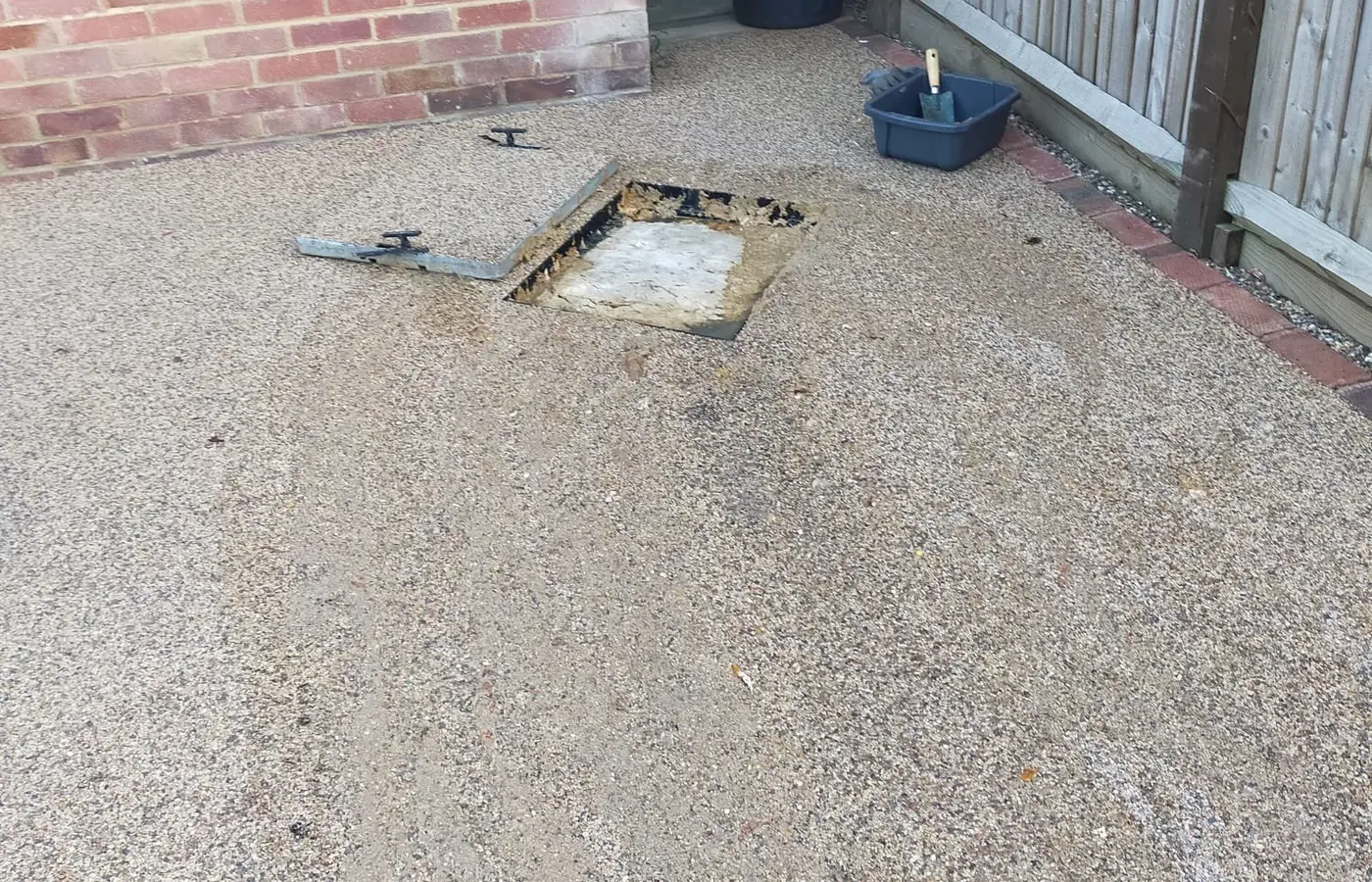
An outside drain takes longer to start, because the inspection chamber has to be found and lifted first. Once the cover is up, drain rodding from a chamber is often quicker than people expect. The longer jobs are the ones where the drain blockage is packed hard with fat, where roots have grown through a joint, or where the pipe itself has cracked or dropped.
Disruption is usually light. You lose the use of the affected sink, bath, shower or toilet while we work, and if the main drain is blocked you should avoid running water anywhere in the house until it is clear. We put sheets down, work from the chamber where we can, and leave the fitting tested and clean.
From the first look to the final flush
Every visit runs through the same four stages, and the clearing itself is often the shortest of them.
- Diagnosing: we ask what happened and when, run water at different points, and lift chambers to see which run is backed up. This tells us whether the stubborn clog is in one fitting or in the shared drain.
- Clearing: the method follows the blockage. A plunger or hand auger for a trap or toilet, a drain snake for a waste pipe, drain rodding from a chamber for an outside run, and high-pressure jetting for the fat, scale, roots and silt that rods will not shift.
- Testing: we run water through the cleared section at volume and watch the chamber to confirm it flows freely, rather than trusting a pipe that drained once.
- Cleaning up: chambers rinsed, covers refitted, fittings and floors left as we found them.
If the drain keeps refilling, or the rods meet something solid, we stop guessing and put a camera down it. The CCTV survey camera and the jetting equipment are our own and travel on the van, so a job that turns out heavier does not sit waiting for kit to be hired in.
What the symptoms say about where you stand
You can often tell from inside the house roughly how big the job is before anyone arrives.
- One slow sink, bath or shower with everything else draining fine: the blockage is almost certainly in that fitting's trap or waste, usually a short job.
- The toilet rising when you flush, or water backing up in the bath when the toilet is flushed: the shared drain below is blocked, often outside.
- Gurgling from plugholes and a bad smell outside: the main run is struggling and the chamber may be filling.
- An overflowing inspection chamber: the blockage is further down the line, and the job starts at the next chamber along.
- The same drain blocking every few weeks: something is catching the waste, such as roots, a displaced joint or built-up scale, and clearing it again only buys time.
That last one is the case for CCTV surveying rather than another clear, because the footage shows what is catching the waste and where.
What decides the time for your drain
- Where the blockage sits, and how easily it can be reached from a fitting or a chamber.
- What it is made of: hair and soap give way quickly, set fat and wet wipes take longer, roots take longest.
- Access: chambers buried under paving, gravel or a shed, or covers painted or rusted shut.
- The age and material of the pipe: older clay drains have more joints for roots and debris to catch on.
- Whether the drain is shared with neighbours, which can mean tracing it beyond your boundary.
- Whether the pipe is damaged, which turns a clearing job into a drain repair.
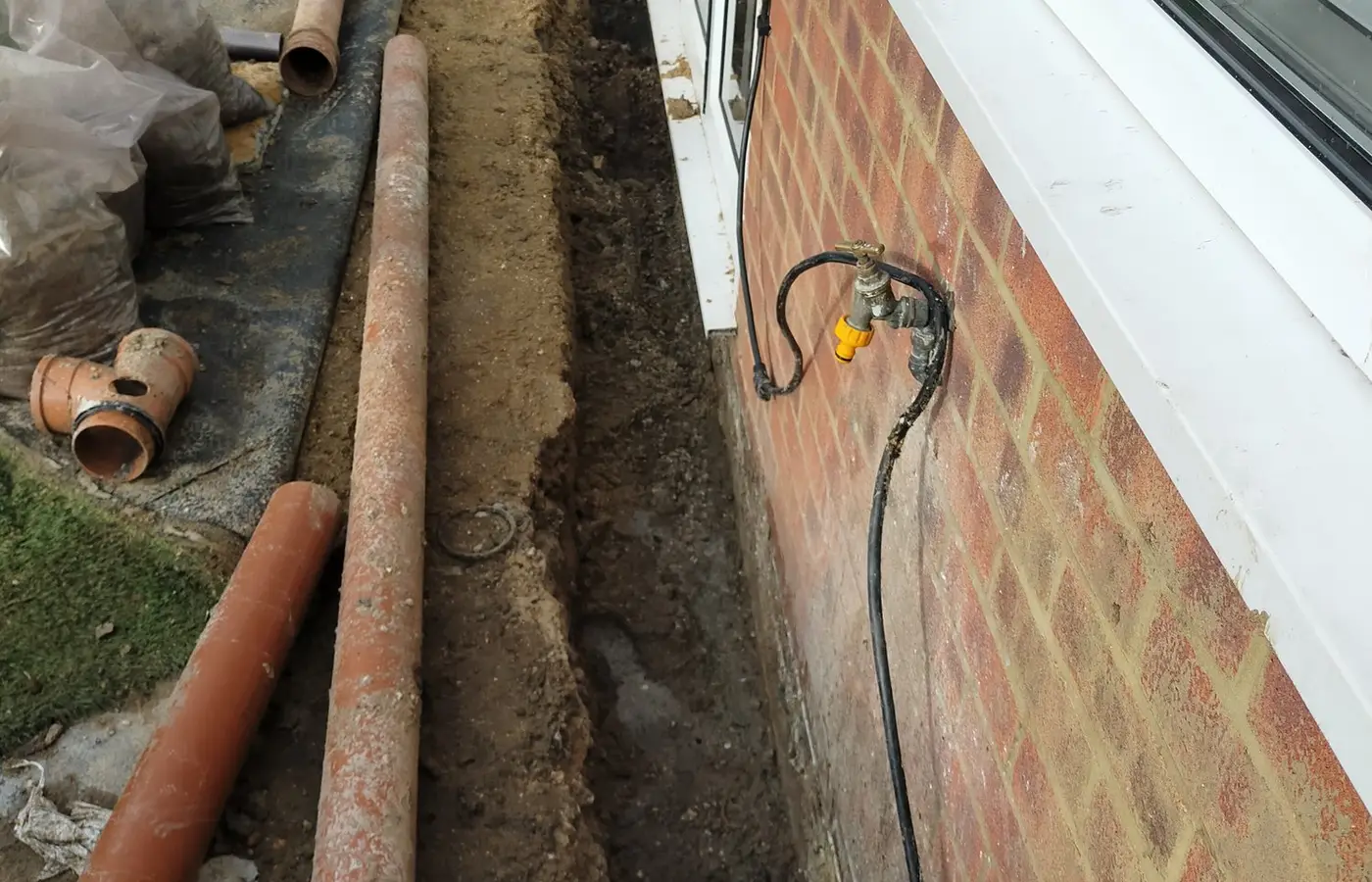
That last point is where dig and no-dig come in. A blocked drain is cleared without touching the garden. A cracked or displaced section can often be repaired from inside the pipe, no-dig, but a collapsed pipe has to be dug out and replaced, and the camera footage is what decides which. The same factors that set the time also set the quote, which is why we give one after looking at the drain rather than before.
We do drain unblocking right across the area we cover, and our page on drain unblocking in Royal Tunbridge Wells sets out the work in that town.
Mistakes that make a blockage take longer
- Pouring chemical cleaner in first: it rarely shifts a solid blockage, and it leaves caustic water standing in the pipe that then has to be worked in carefully.
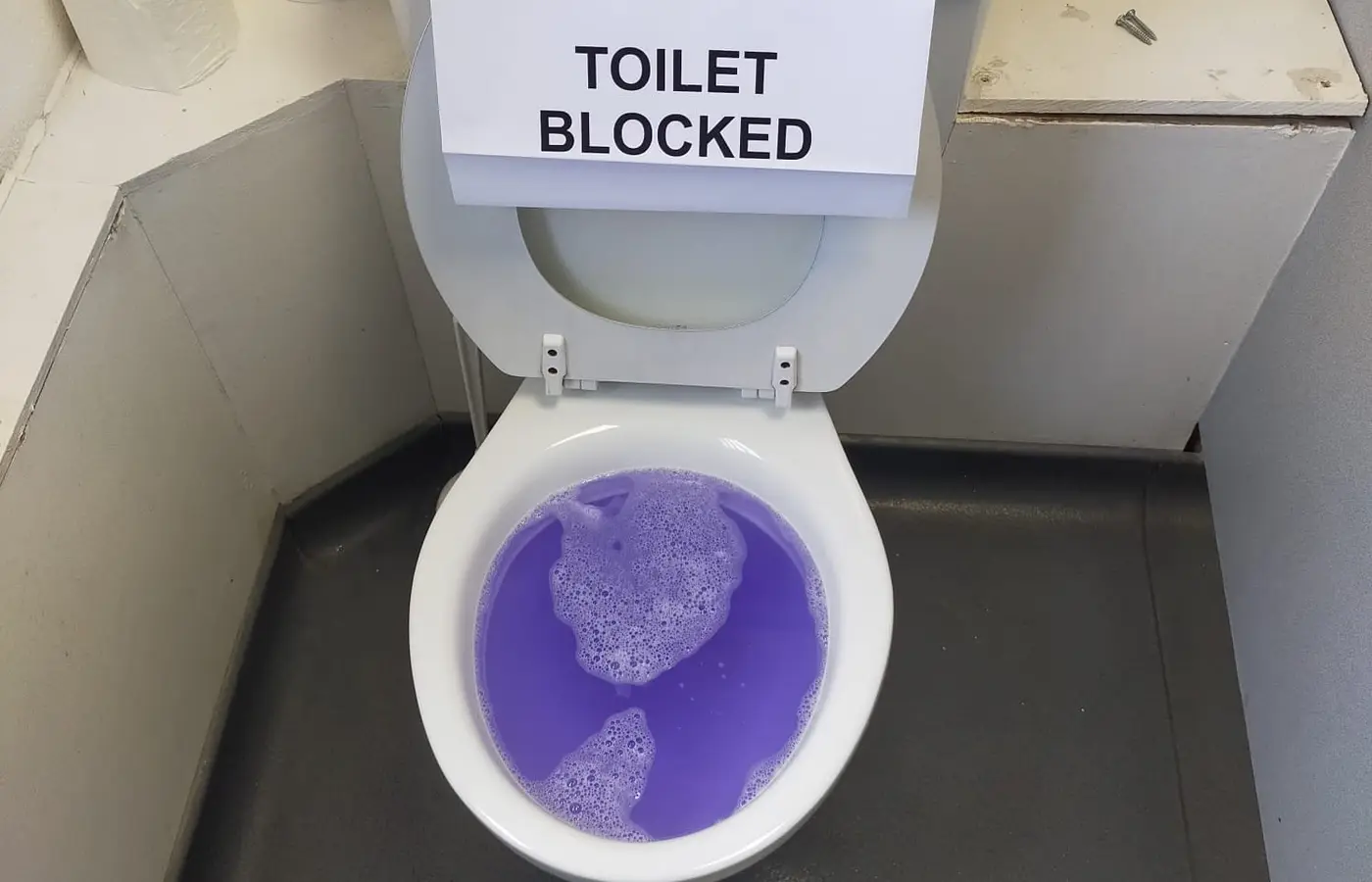
- Flushing again to see if it clears: a blocked toilet will overflow, and the mess adds time.
- Forcing a hired rod through a joint: this can push the blockage further along or dislodge the joint.
- Assuming the blockage is inside because the symptom is inside: a backed-up bath often points to an outside drain.
- Believing every blocked drain means digging: most are cleared from a chamber or the fitting, and digging is for a pipe that has failed.
- Treating a repeat blockage as bad luck: it usually means a fault in the pipe, and a survey shows it.
If water is coming up where it should not, stop running taps and get in touch. The 24-hour emergency call-out is there for exactly that.
Get a quick quote from Vision Plumbing and find out what is holding up your drain before it backs up any further.